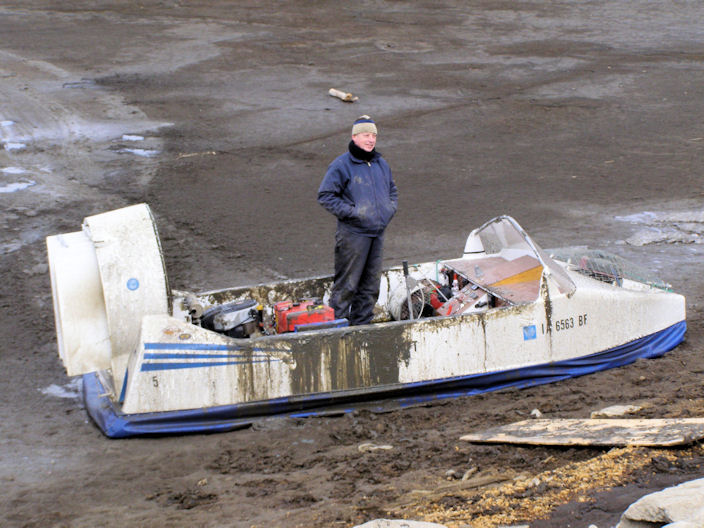
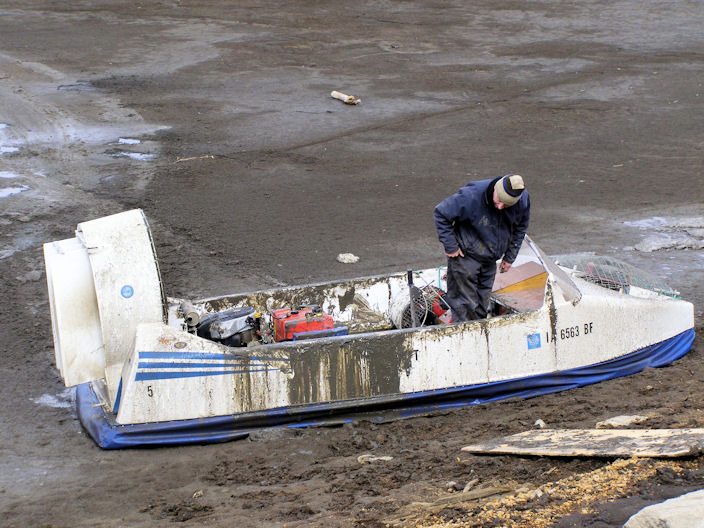
Hovercraft Deer Rescue at Zorinsky Lake, Omaha
I’ve been building and operating hovercraft for several years on the Platte River around North Bend/Morse Bluff, and so it was not unusual to get emails and phone requests for information on hovercrafts, or to ask me to give a presentation to various clubs and organizations, so I was not too surprised to get a call one Sunday morning. The Sunday in question was one following the clocks-forward hour change, and the call turned out to be a little different from the norm.
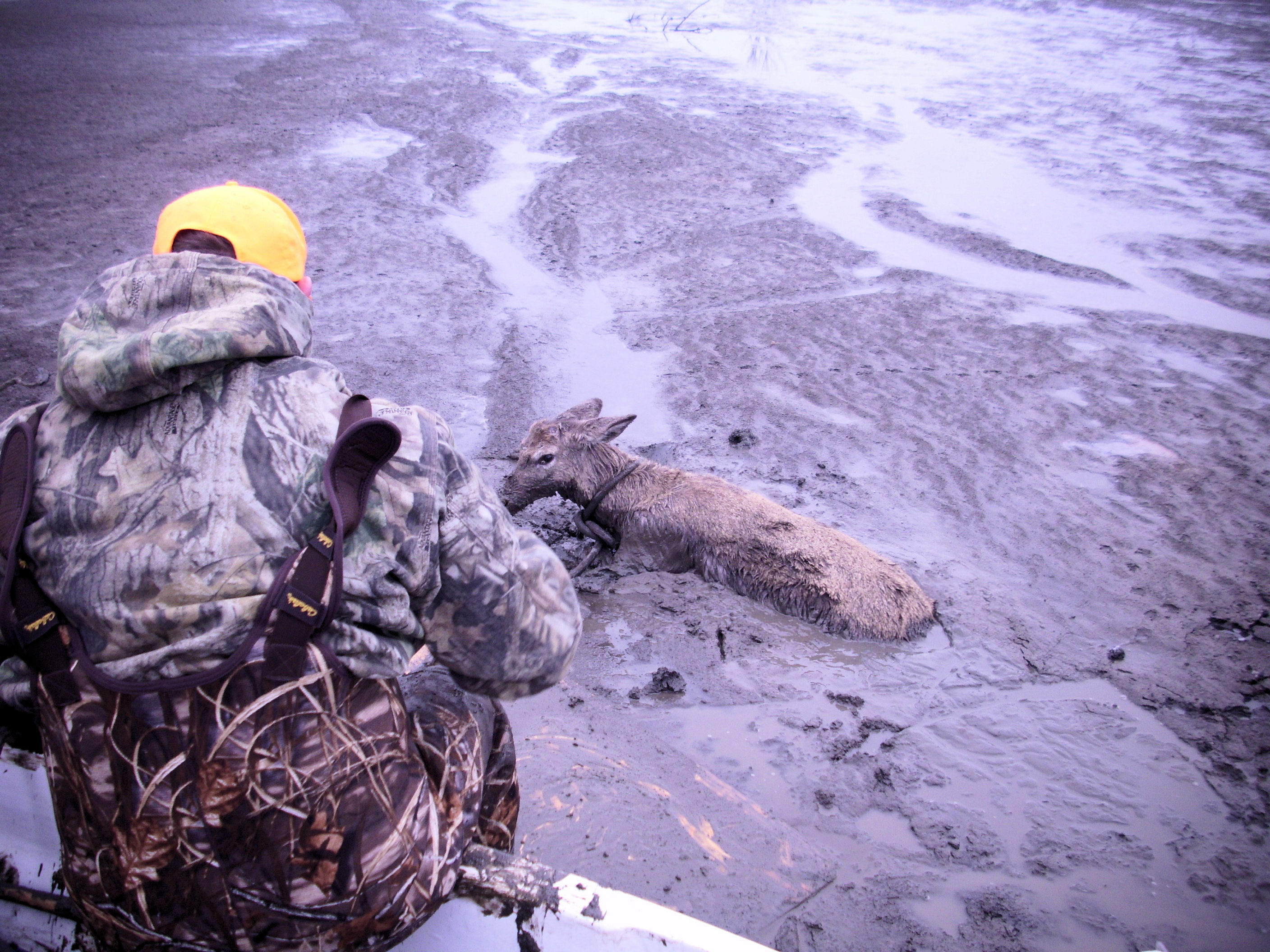
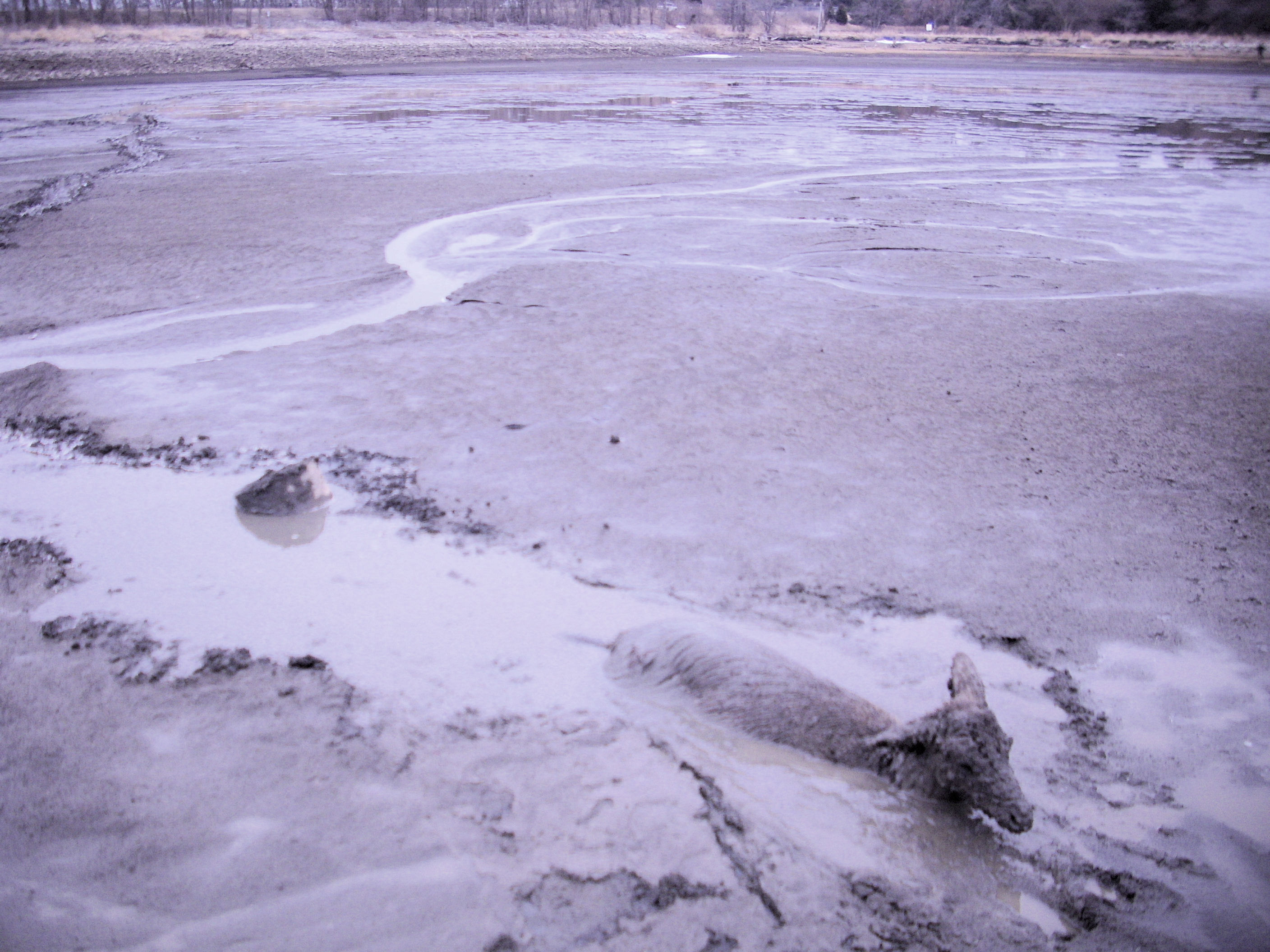
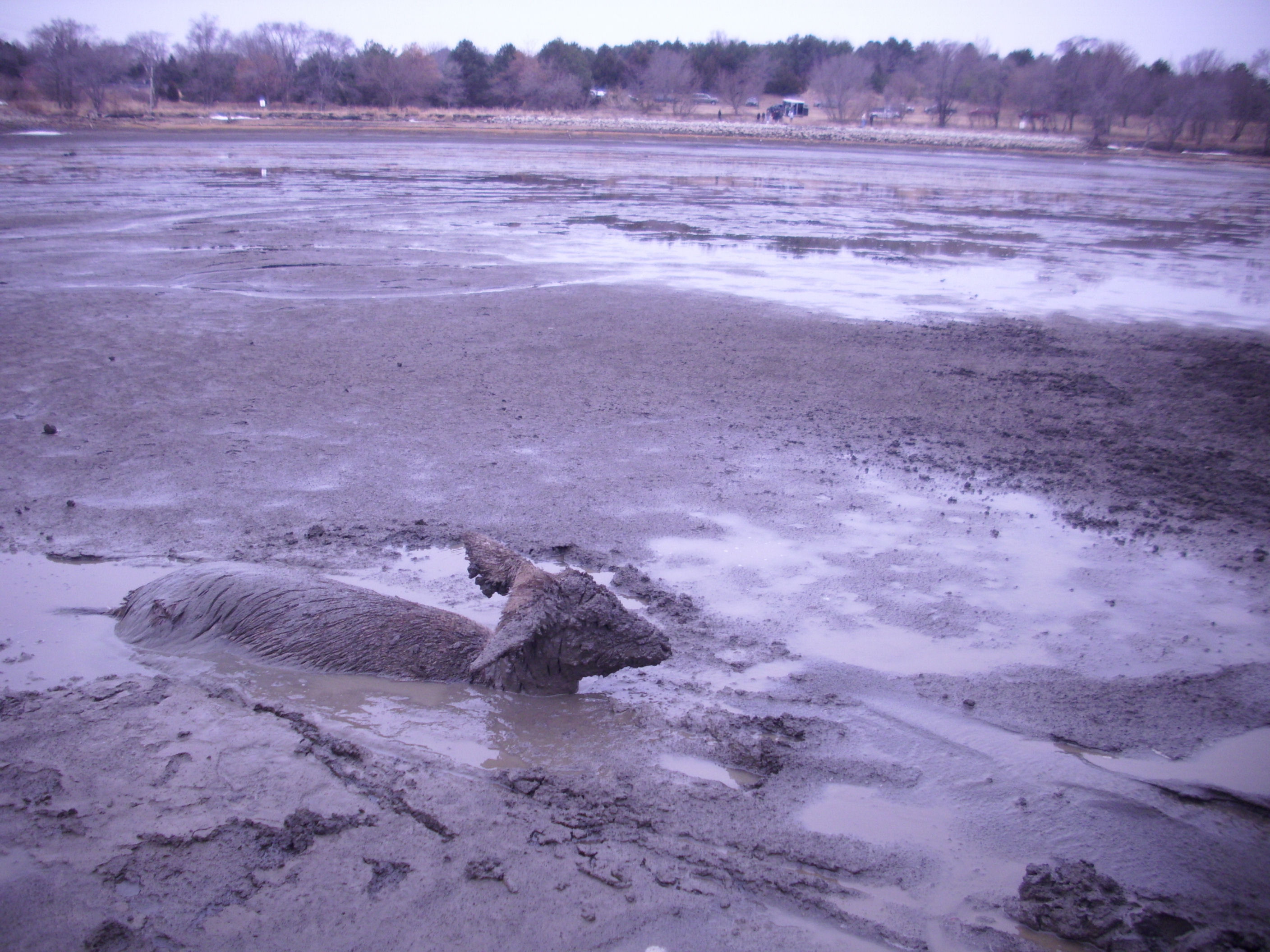
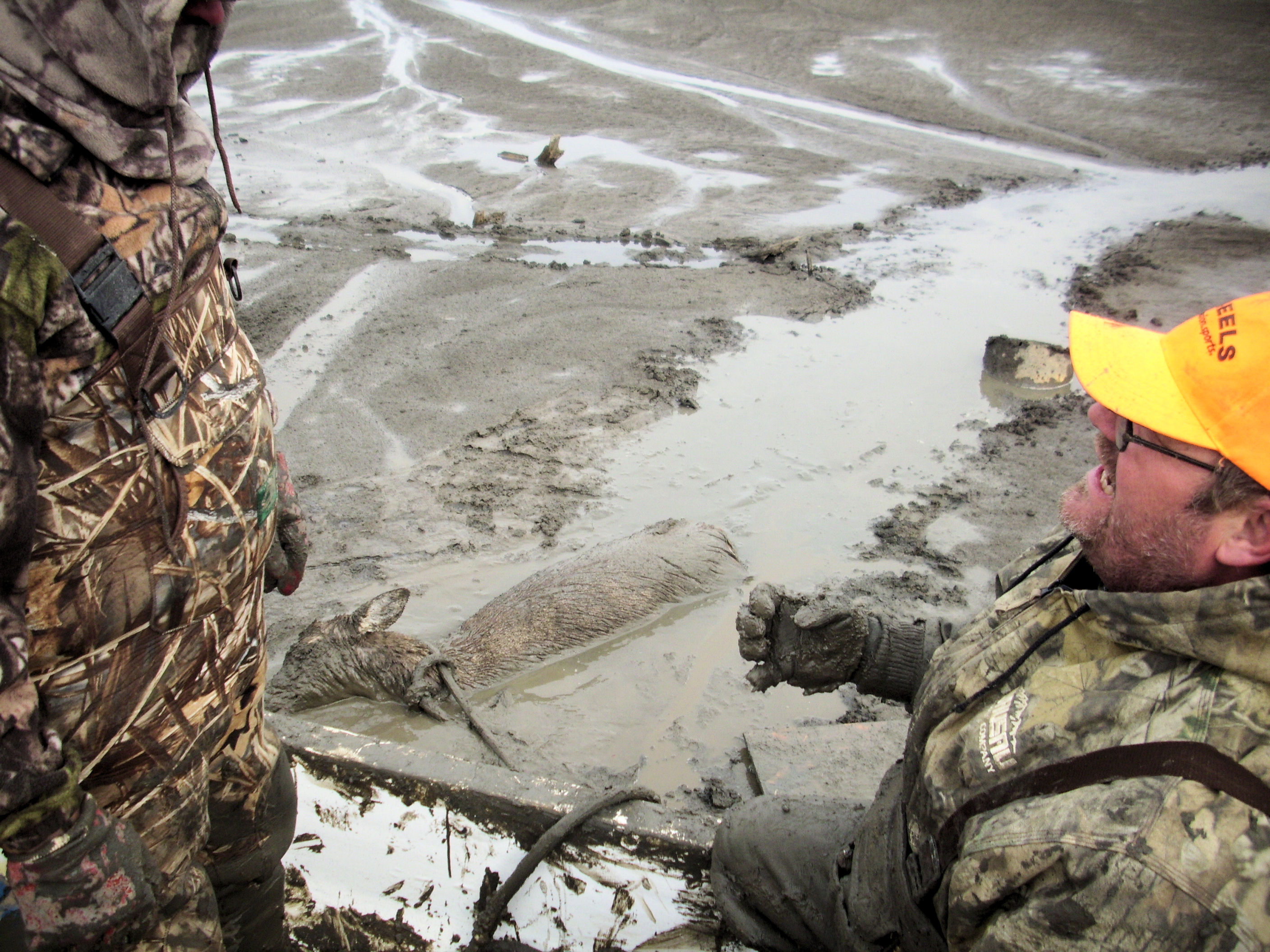
Craig Stover, a NE Game & Parks Commissioner, called to ask if I had a hovercraft and would I be interested in taking it out to help rescue three deer, trapped in the mud at Zorinsky Lake in Omaha, Nebraska. The lake had been drained at the end of the previous year to deal with the problem caused by an aggressive zebra mussel infestation.
Now this was still in the colder part of the year and I had decided to do some preseason modifications to the hovercraft on this particular weekend. I told Craig that I been working on the hovercraft just the day before to carry out some modifications and had already removed the seats and the fuel tank prior to doing some modifications, but that it would only take me a short while to get the get the craft operational again, and that I would be more than happy to come and see if I could help out.
The call had come in at around 10:30am and in minutes I was testing the engines and loading up the trailer. The removal of the hovercraft's seats created extra space in the craft so I left them out and just refitted the fuel tank. As soon as I'd double-checked everything, my wife, Anne, and I were on our way from our home in Council Bluffs, IA, arriving about 30 minutes later at the north end of Zorinsky Lake, on the West side of Omaha by around 11:45am.
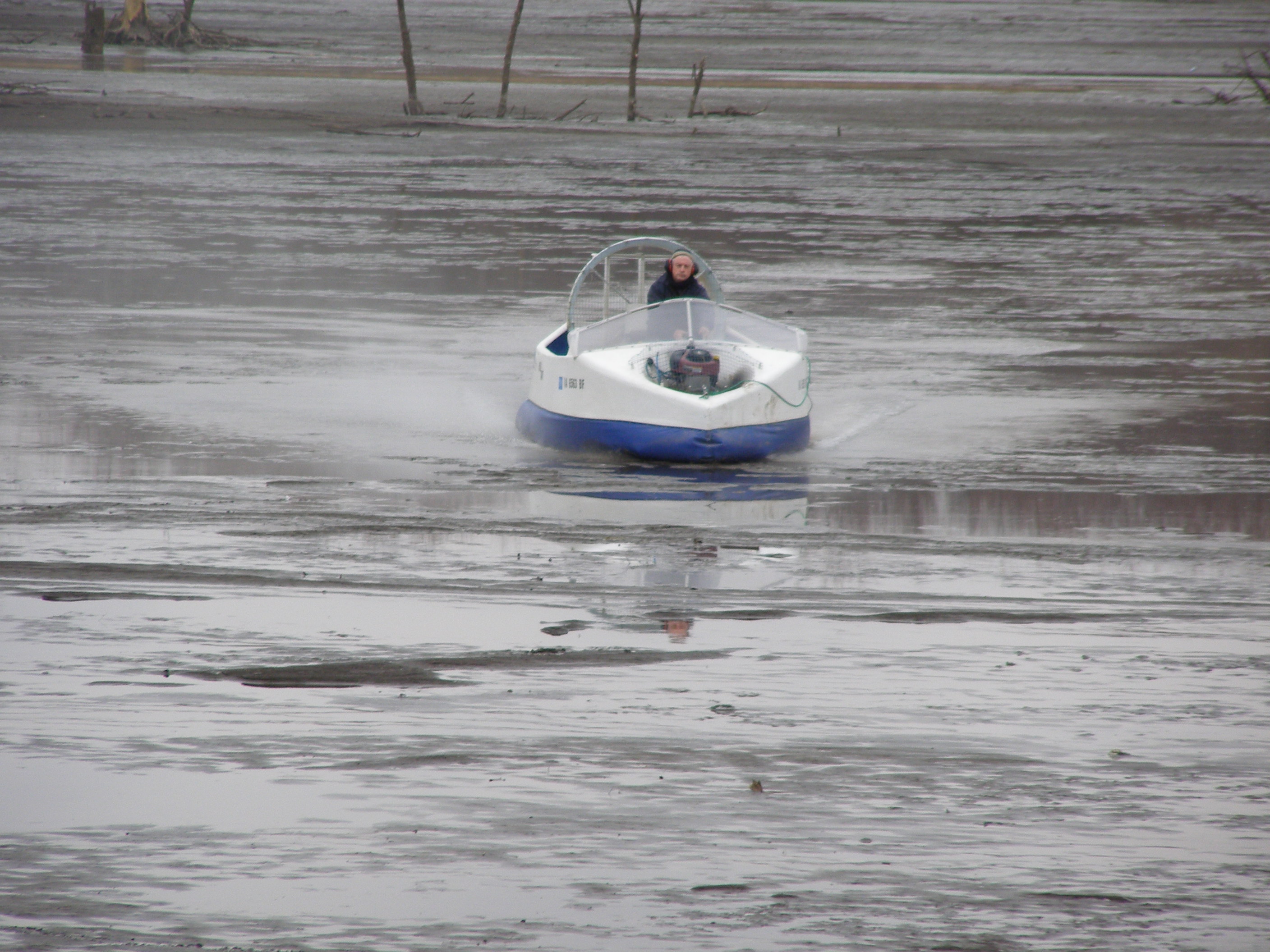
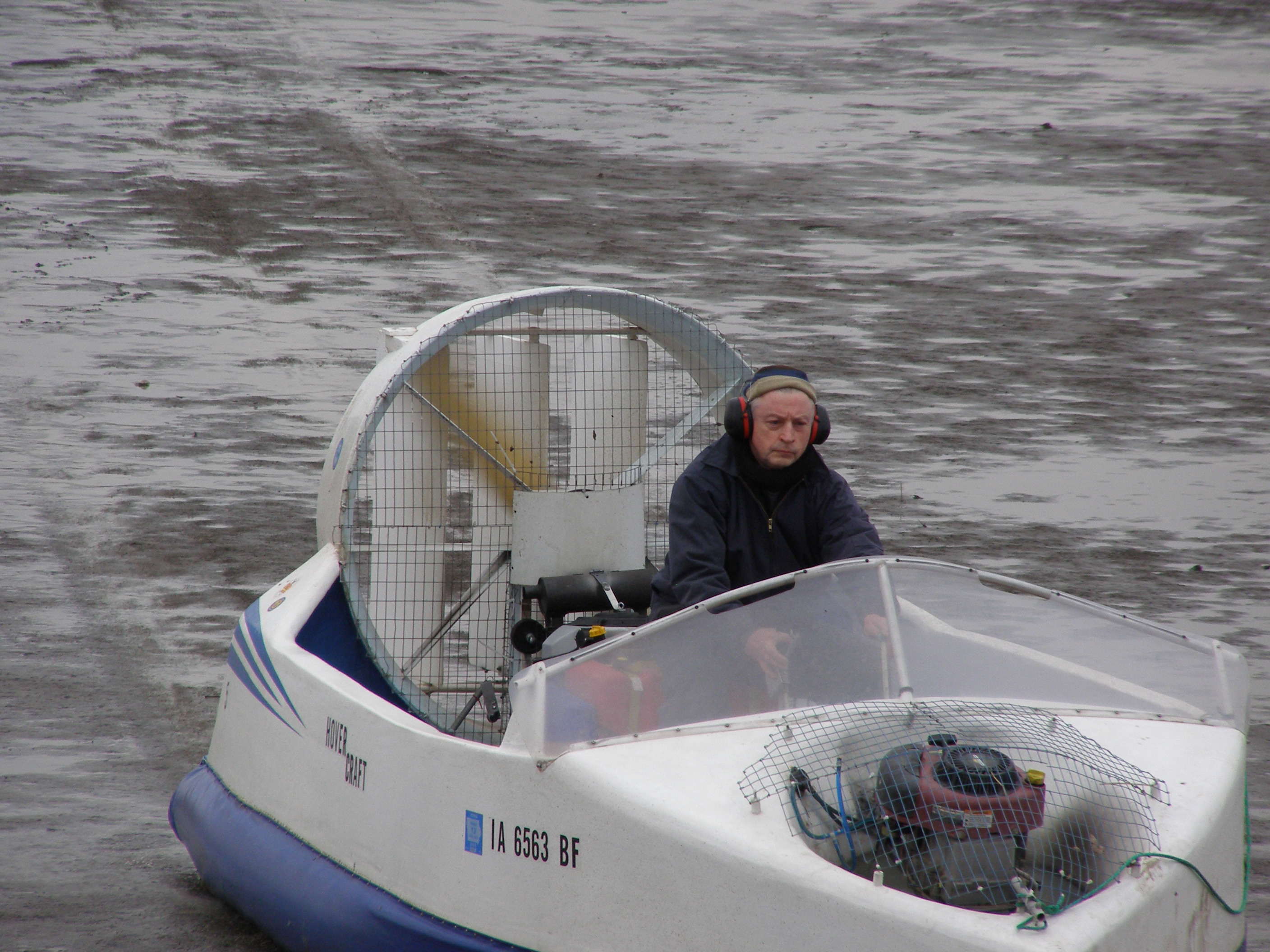
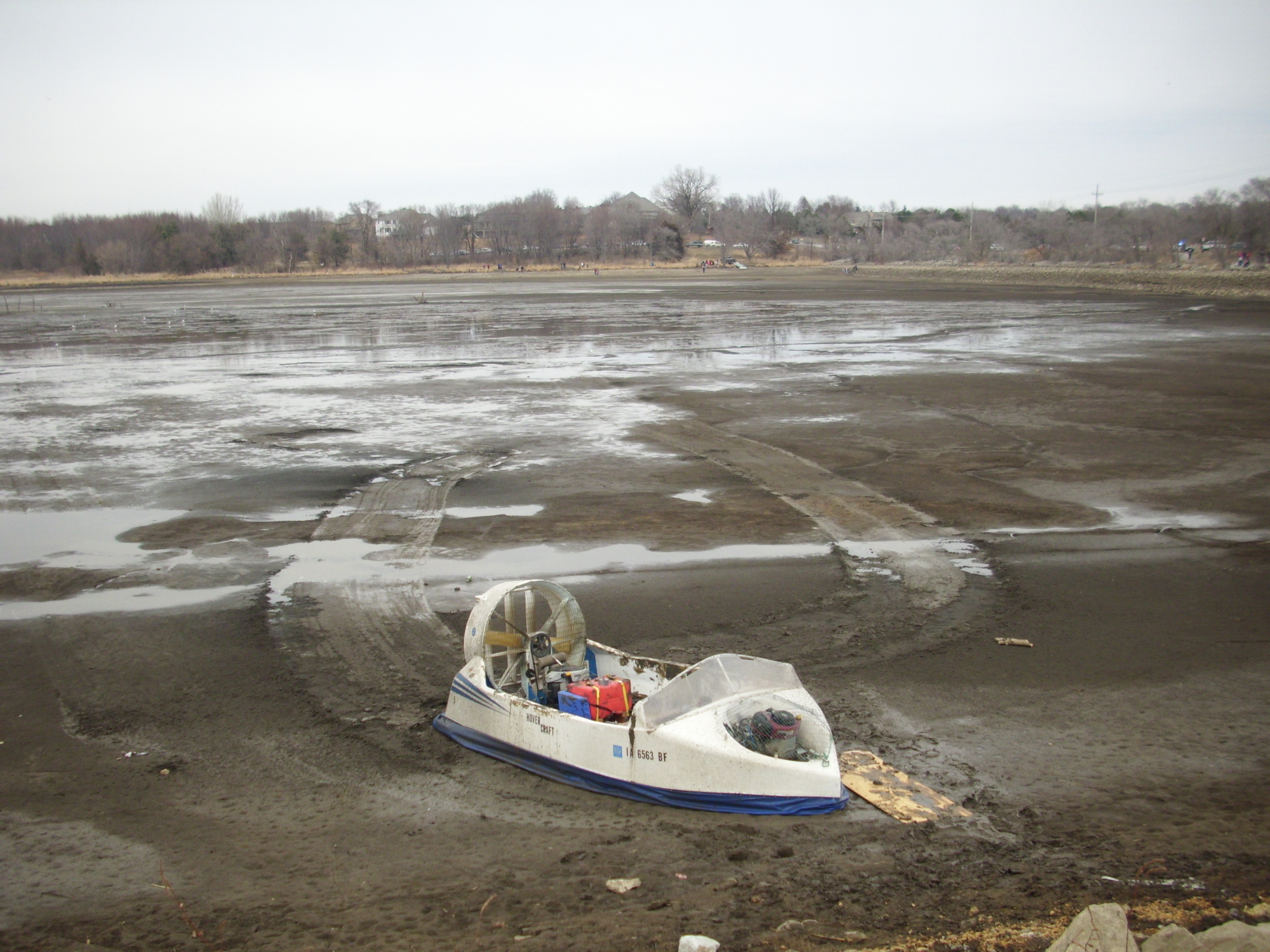
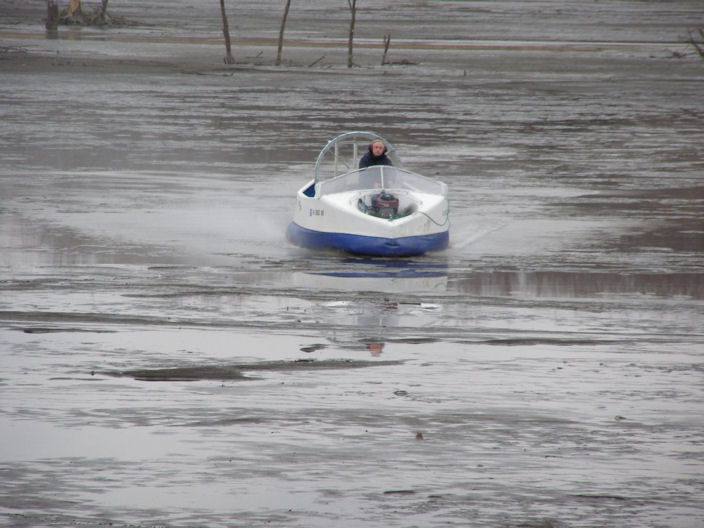
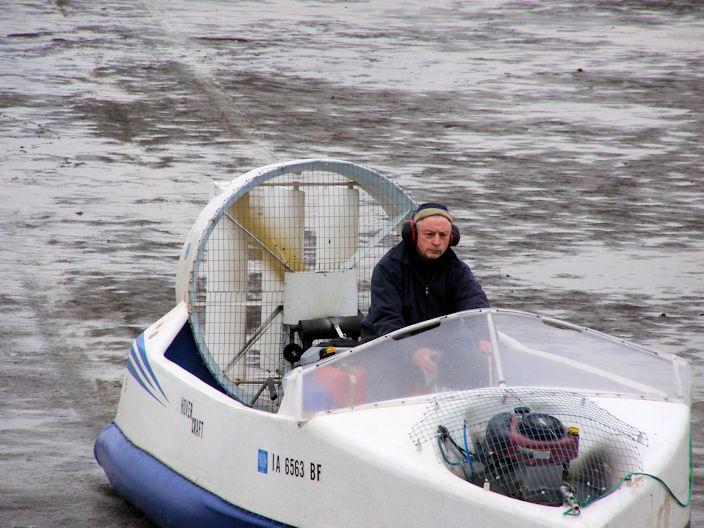
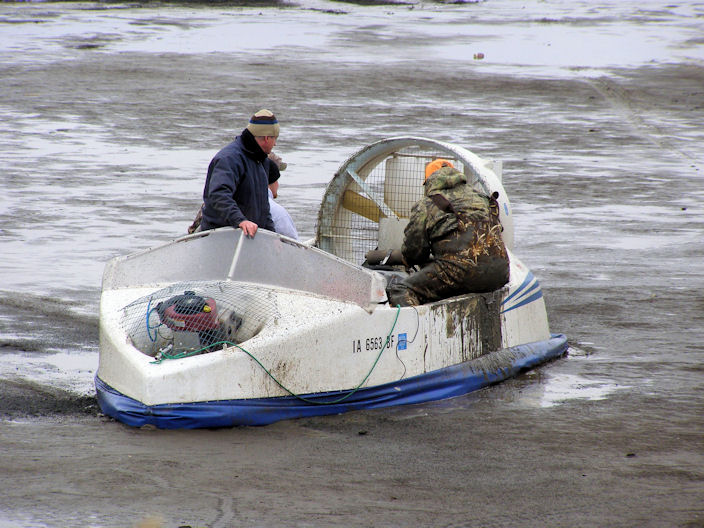
As the west side of the lake was surrounded by a barrier of large rocks I asked one of the Game and Parks Law Enforcement Conservation Officers, Jeff Clauson, to take me around the lake to the east shore so that I could look for a better place to launch the hovercraft. We found a great launch site just inside the park area, and Jeff then hitched my hovercraft trailer to his four-wheel-drive vehicle and reversed the trailer down to a flat area where I could launch the hovercraft off the trailer. My hovercraft uses a 10hp lift motor and fan to provide a cushion of air to create an almost frictionless hover about 8” above any reasonably flat surface such as water, sand snow, grass and even very sticky mud. A 22hp second engine is used to provide the thrust to move the craft at speeds of up to 35mph.
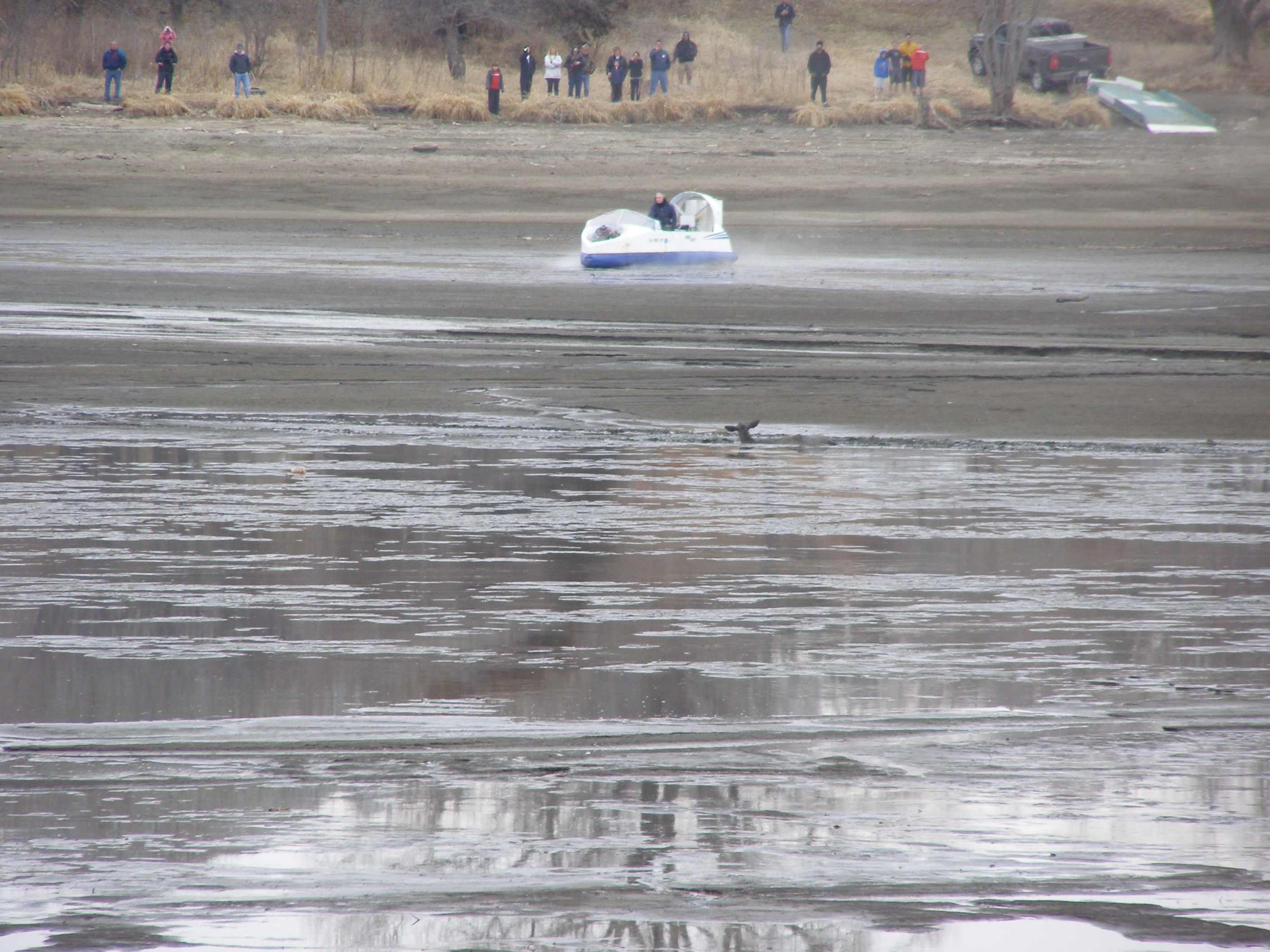
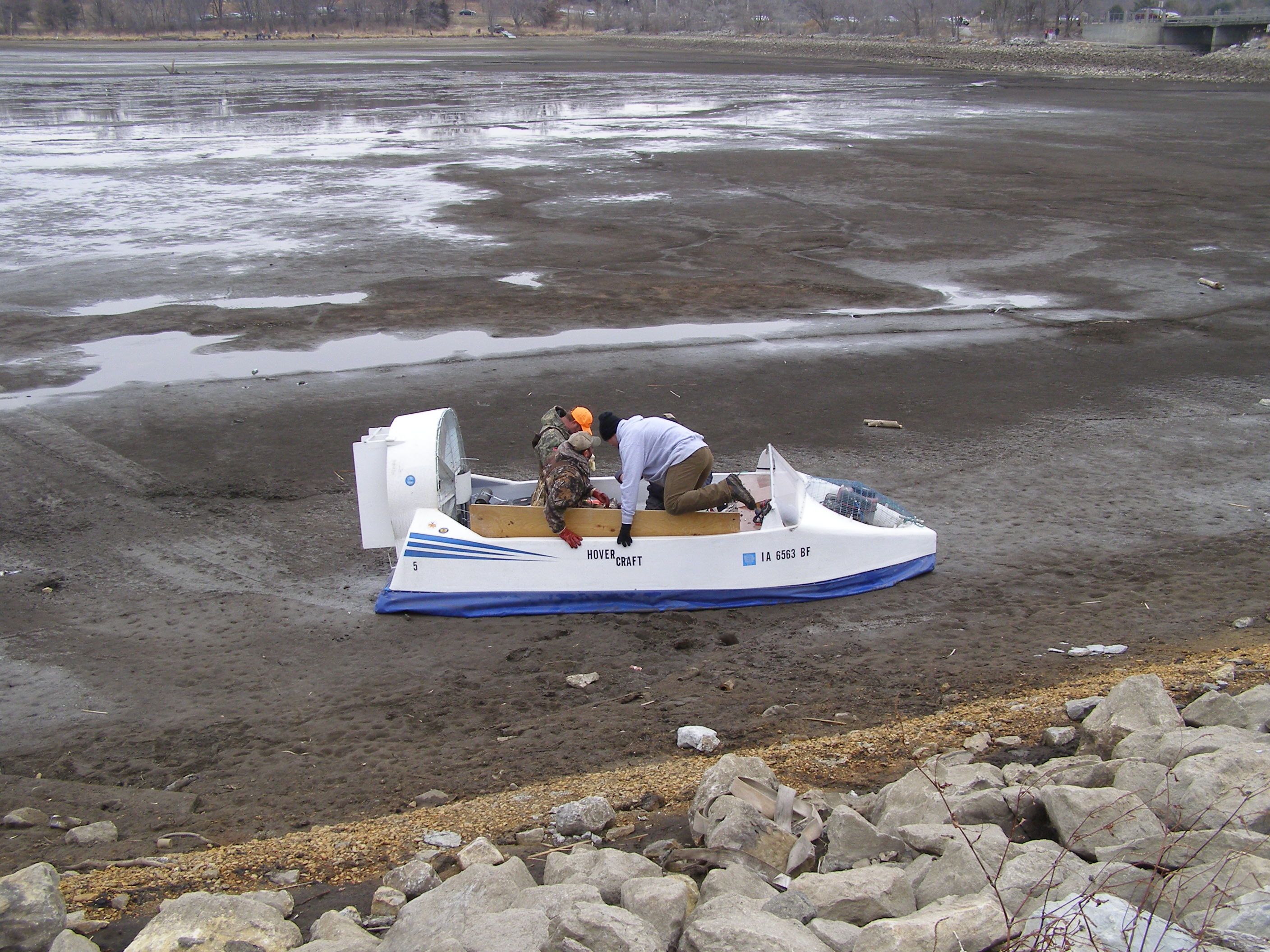
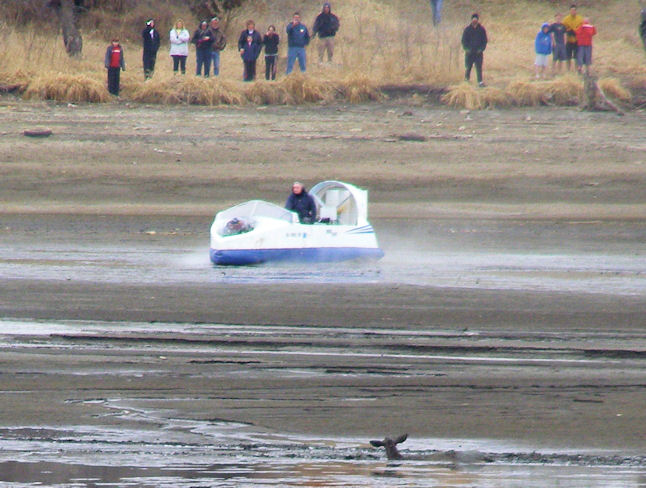
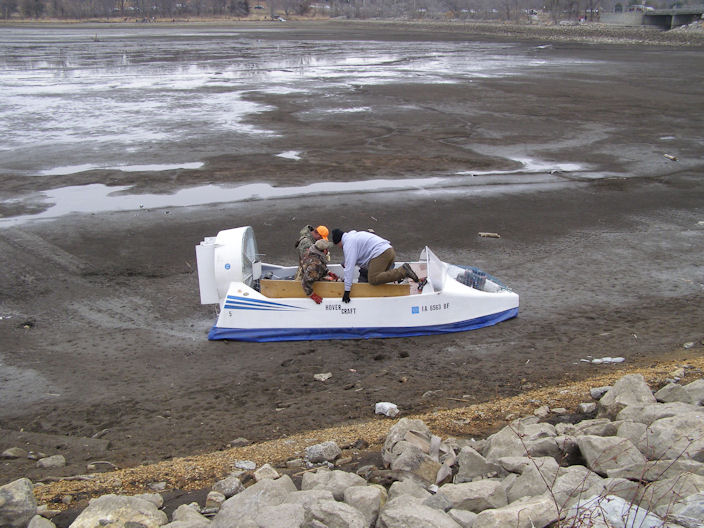
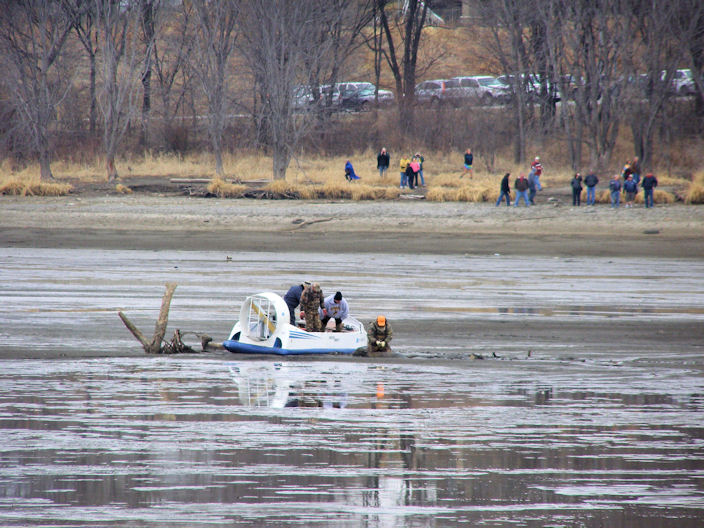
I was able to hover the craft off the trailer onto the dried out edge of the lake bed and then hover straight across the oozy mud to the other side of the lake, giving the three deer a wide berth so as not to frighten them, and I parked the craft near the rocky bank just below where the rescue services were waiting to begin the operation. We had to wait around for a little while until the vet arrived with the anesthetics, to allow Pat Molini (NE G&P District Manager Wildlife Division), to be able to anesthetize the deer so that they could be handled safely.
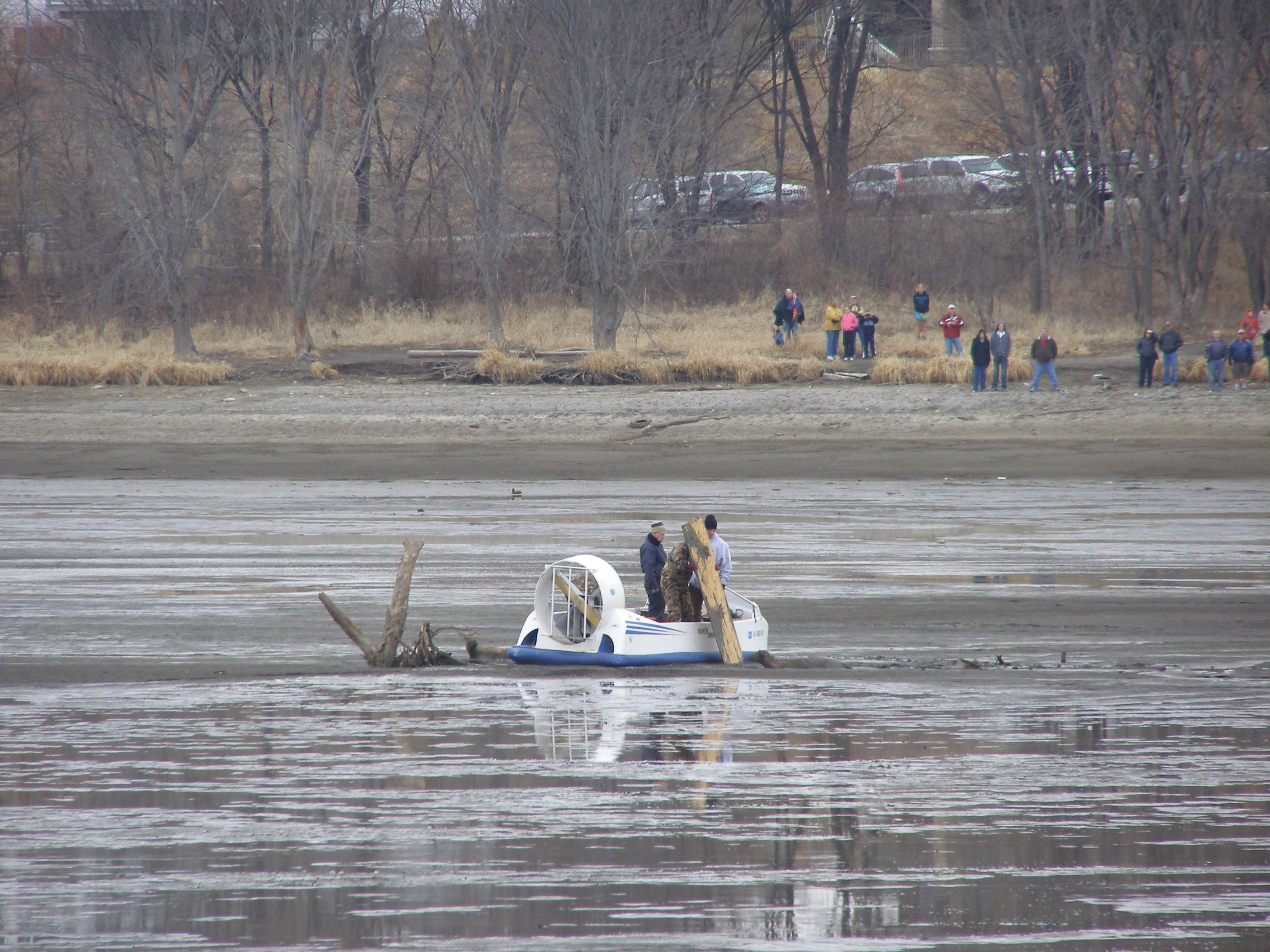
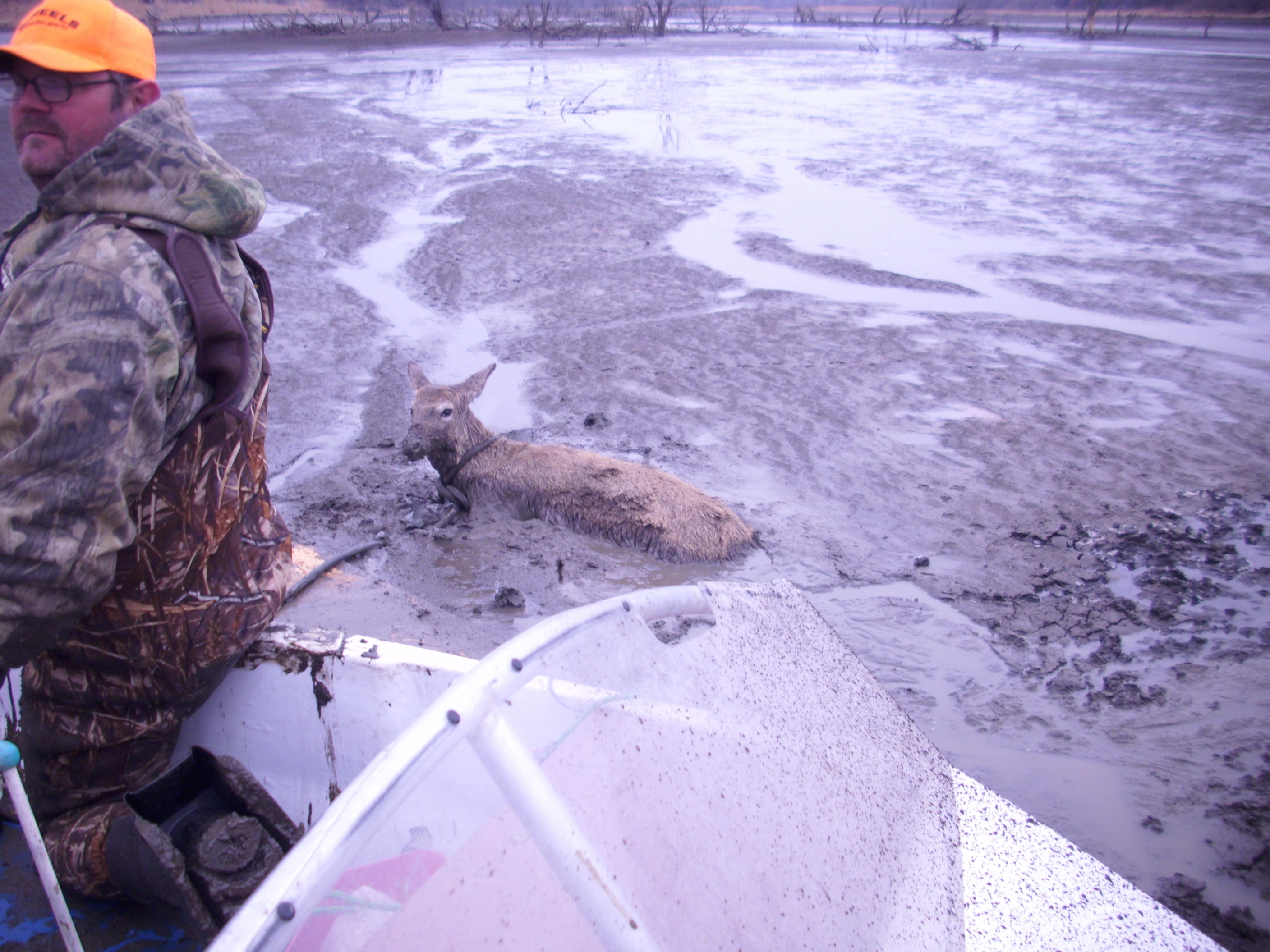
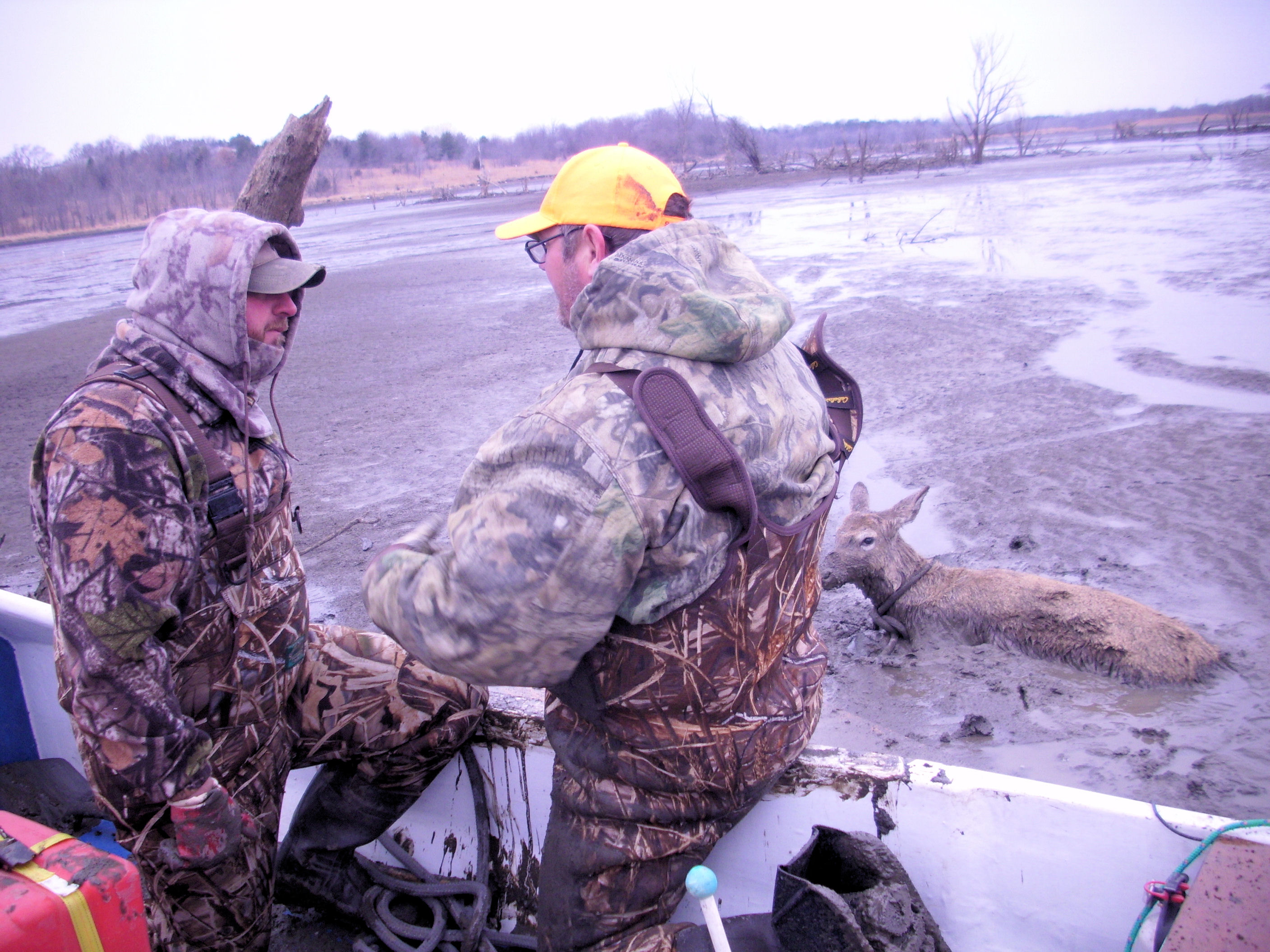
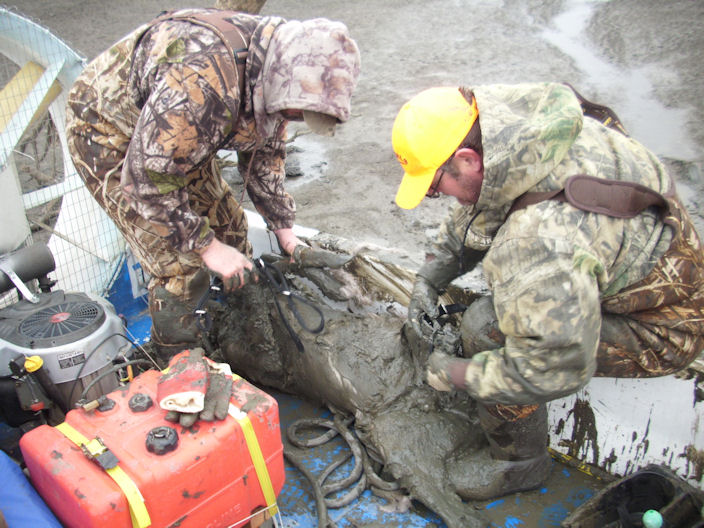
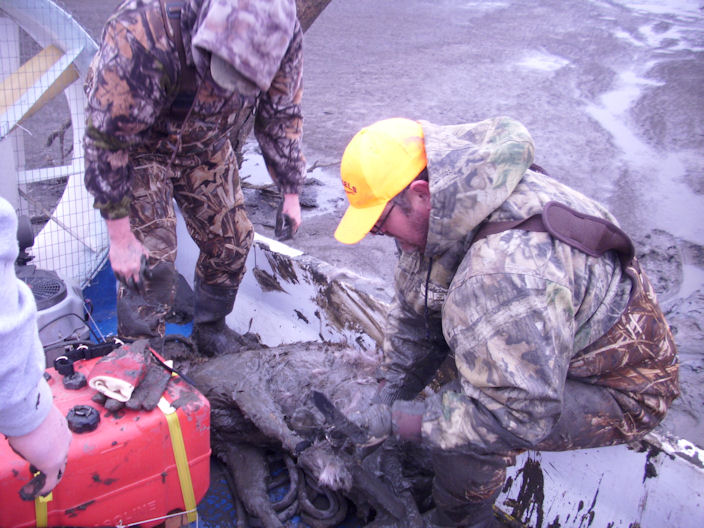
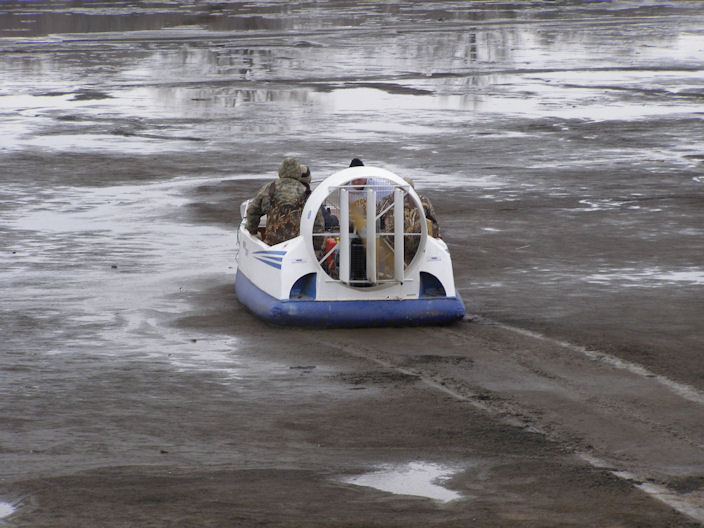
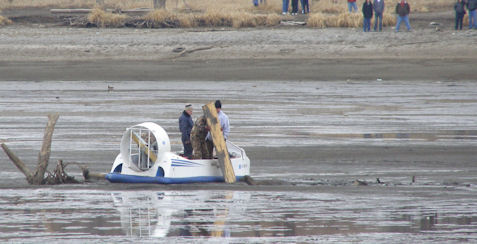
As soon as the anesthetics arrived, we were off across the mud to the center of the lake. Normally only my wife, Anne, and I go out on the hovercraft so I wasn't sure whether it could handle the extra weight of three burly conservation officers and myself and a very wet and muddy deer. I was as surprised as officer’s Pat Molini and Stacy Lewton, and volunteer Alex Stover, that the hovercraft was actually able to carry all four of us on the way out without any problem. I had envisaged having to drop one of them off, to stand on a piece of plywood for support, once we collected the deer if the extra weight turned out to be too much for the craft. Our total weight was probably somewhere between 800 pounds and 1000 pounds. When I originally designed the craft I had calculated for theoretical 1000lb load so I was really pleased that the hovercraft really was able to carry that sort of load effectively. We headed out to the first two deer that were fairly close together in the middle of the lake bed, and Pat laid a sheet of plywood on the mud to support him if he had to get out onto the surface, but I was able to hover close enough for him to be able to quickly administer the anesthetic shots to both deer. We then had to wait for twenty minutes or more, in the very cool conditions for the anesthetic to take effect. The first deer finally succumbed to the tranquilizer and two of the conservation officers were able to haul the creature aboard the hovercraft easily. They promptly strapped its legs together just in case it woke up, and they also put a woolen cap over its head to reduce potential stress levels.
The uneven weight in the craft did cause me some initial handling problems, and we made a few unintended 360 degree rotations, as I overcorrected the steering, which probably mystified the onlookers. I got the guys to more around to rebalance the craft – they are weight shift vehicles.
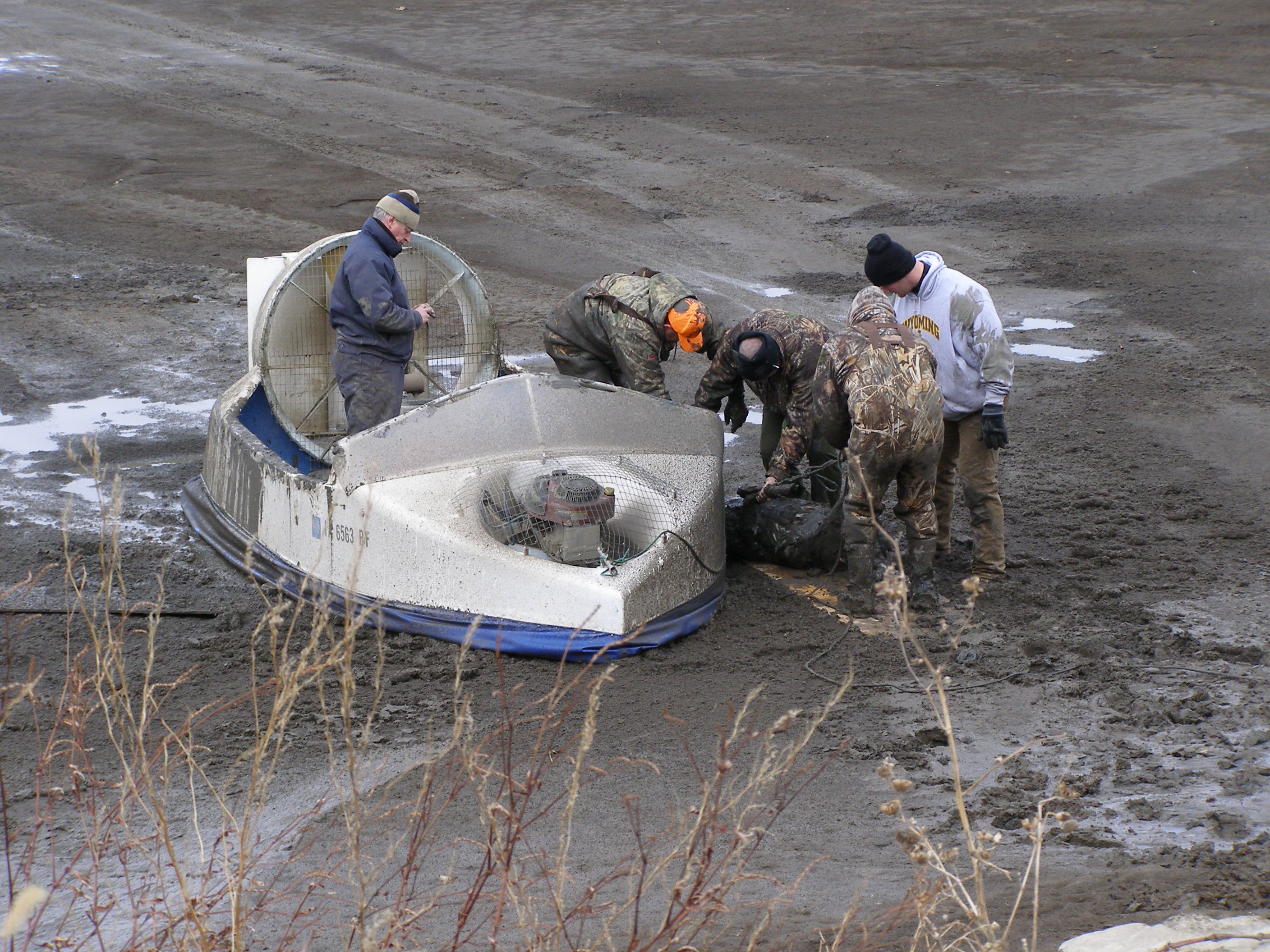
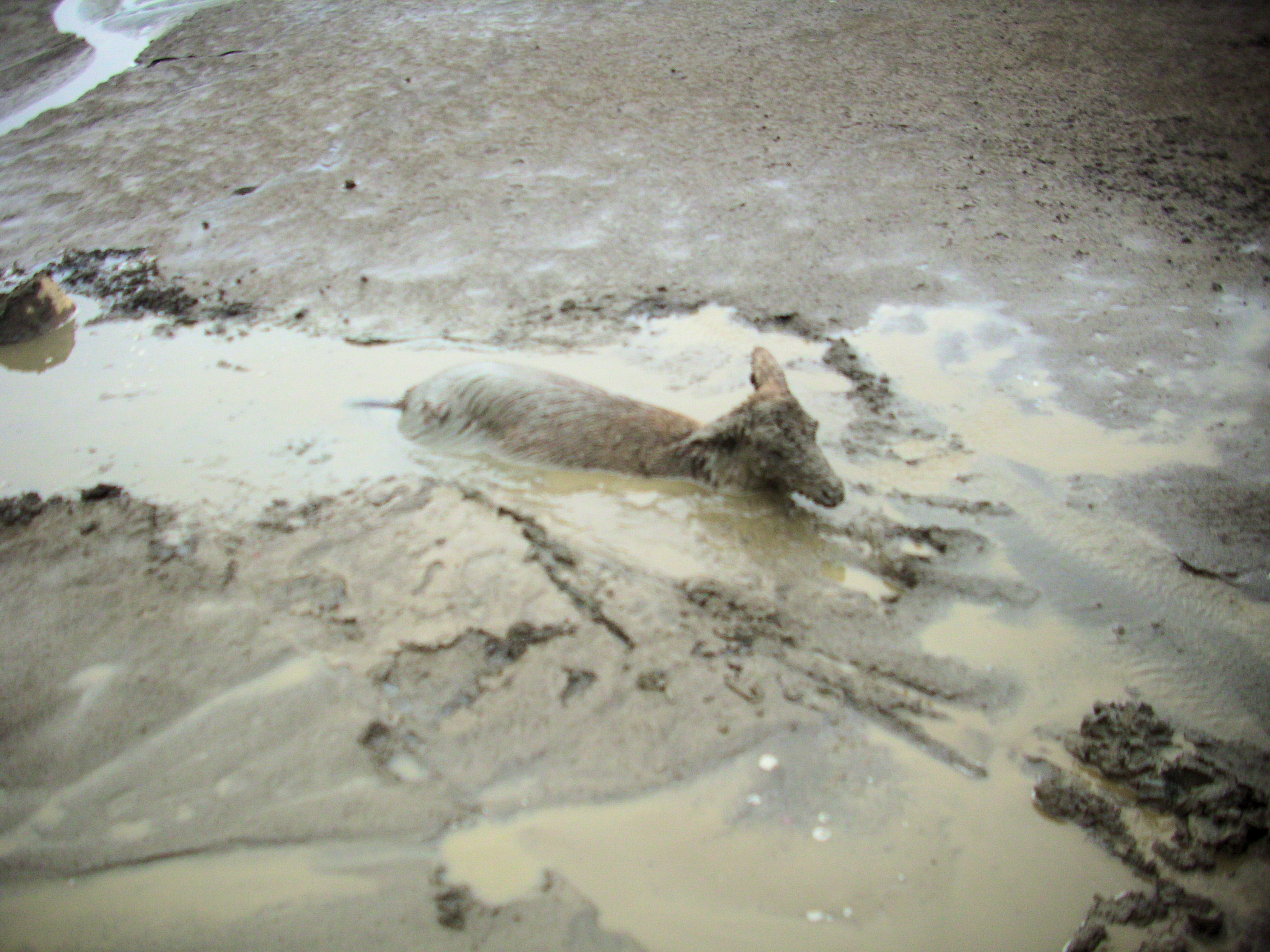
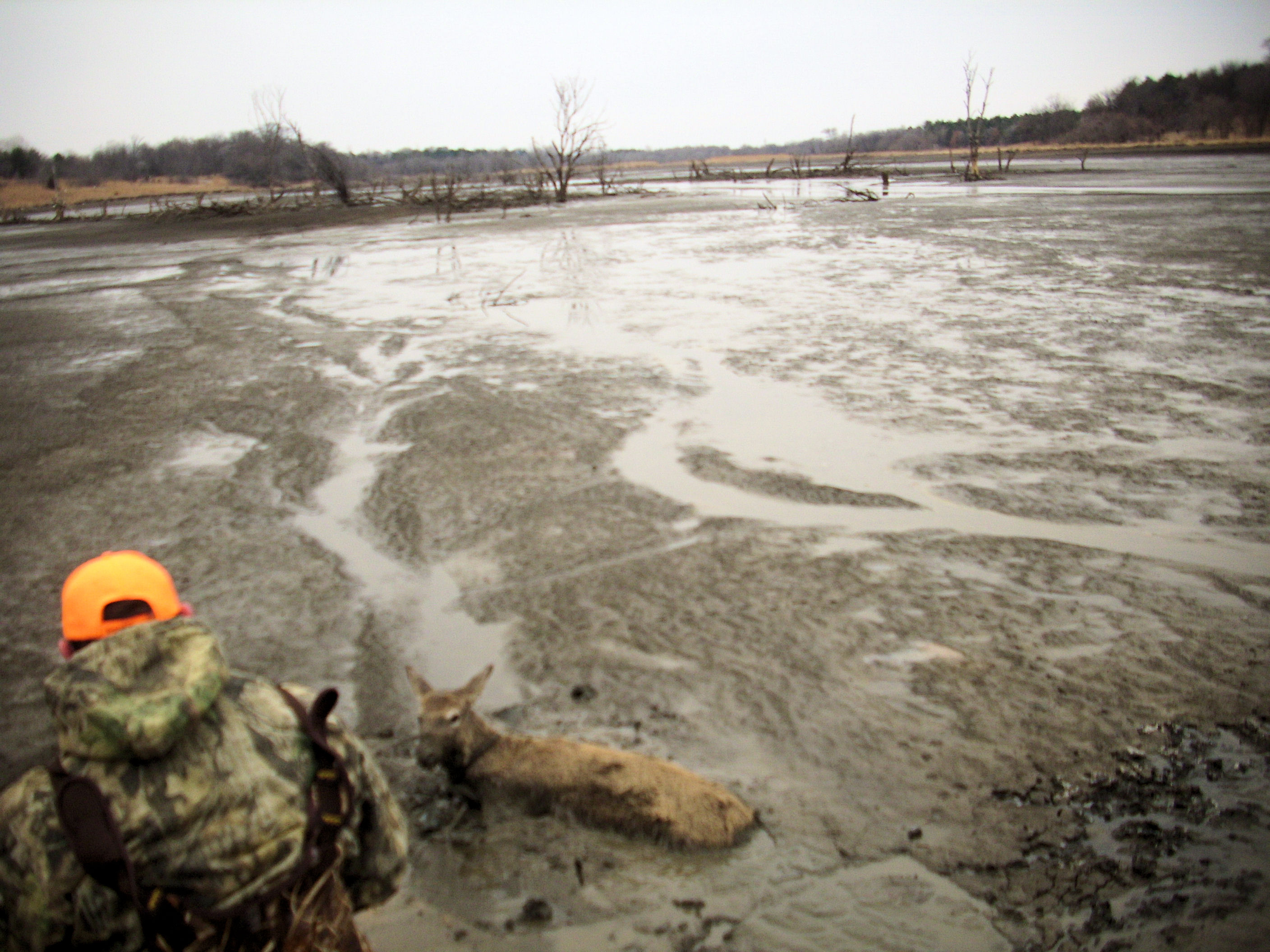
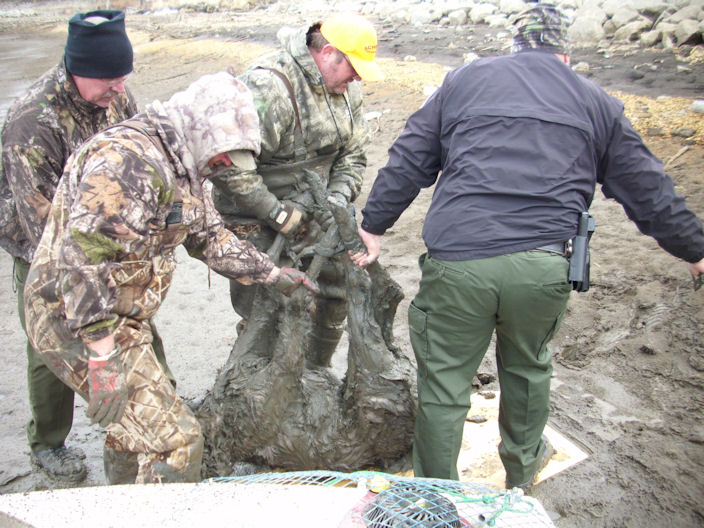
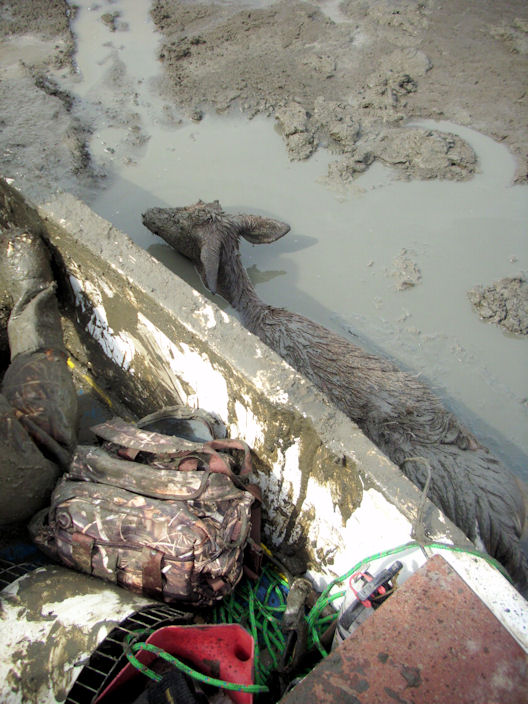
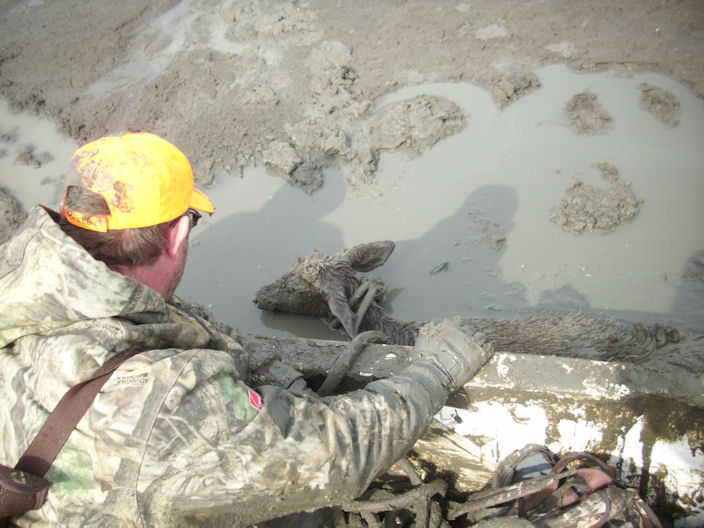
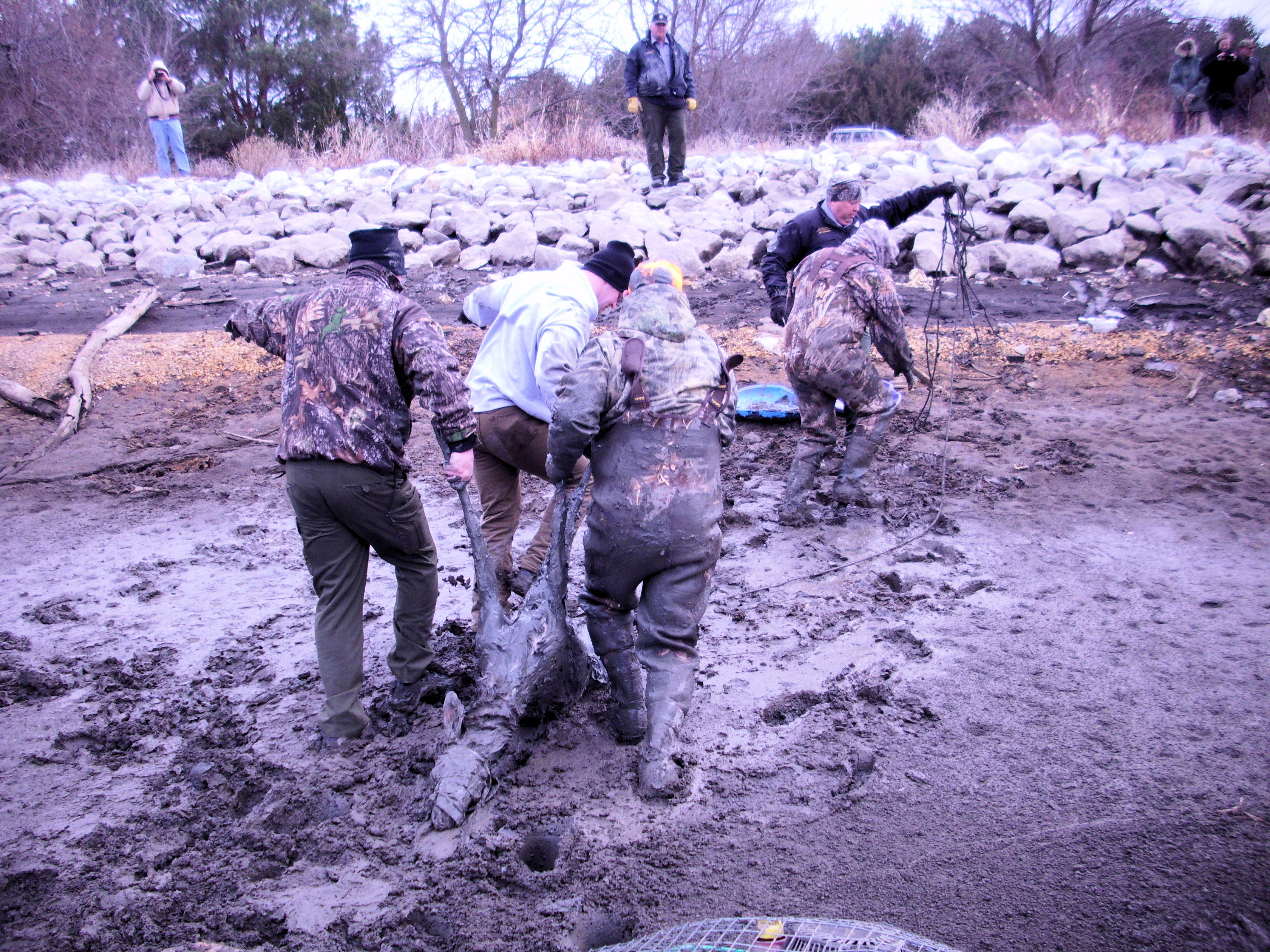
On the way back, the woolen cap was sucked up by the thrust propeller and got tangled in the belt drive throwing the thrust drive belt off the pulleys. It only took me about five minutes to slacken the engine mounts, relocate the drive belt and re-tension the pulley system and we were off again, and able to deliver the deer to the waiting helpers. We were able to get within about ten to fifteen feet of the bank where the mud was nothing like as deep as it was further out. One of the conservation officers had estimated the mud to be between six and ten feet deep towards the center of the lake, and the deer were up to their necks in the mud when we got there.
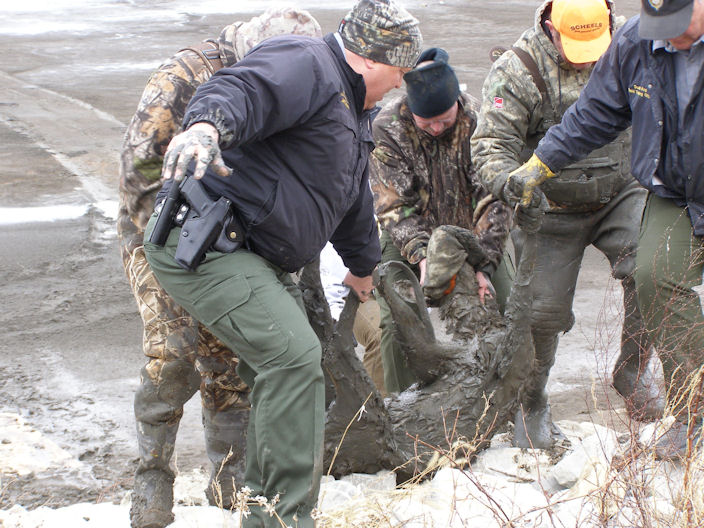
I dropped Alex Stover off on the second run to reduce the hovercraft's load, and went back out with the Pat and Stacey to collect the second deer. Pat administered another shot and the deer soon succumbed to the drugs. I had been able to get the hovercraft in very close to the deer which made it very easy for the two officers the haul the creature aboard. By this time, both officers, the craft and myself were fairly well covered in thick, slimy, mud, and tripping and sliding around in the craft as we loaded up again. The recovery went well and we were soon back to the shore to deliver the second deer to the waiting vet. Once again, we headed out into the center of the lake for the third deer and repeated the rescue procedure. By now the officers had got the technique perfect, and we were loaded up swiftly once the tranquilizers took effect. It was getting very cold and a little wind was sucking away body heat rapidly. We had to wait about twenty minutes for the drugs to do their thing and I was starting to feel the chill eating though my clothing and biting to the bone. I was looking forward to a hot drink and something to eat. I heard the onlookers cheer and applaud as the last deer was hauled on board, and in minutes we were hovering to the shore, once again slipping and sliding on the muddy layers coating the sides and floor of the hovercraft.
Once the deer and the officers and their equipment had been unloaded from the hovercraft, I hovered back across the lake to my trailer where Jeff and several other bystanders helped to push the hovering craft back onto my trailer.
I was delighted with the way the hovercraft performed after the winter layup. My biggest fear had been to have the craft breakdown in the middle of the lake, and end up having to be rescued. However, the hovercraft performed perfectly. The reason I had been called to do this rescue was that so many people had called for something be done to save these poor creatures trapped in the mud, in a very visible location. The local TV stations had picked up the plight of the deer and viewers did not want to see the deer left stuck in the mud. Sadly, the deer later died from exposure and stress, but the rescue proved that the hovercraft is a great asset in these difficult conditions where a traditional rescue boat would not be able to venture safely. It happened to be three deer stuck in the mud on this occasion, but another time it could be a child who wanders out little too far and gets beyond the reach of normal rescuers.
The conservation officers were very impressed with the performance of the hovercraft and I'm sure I will be called out again if the rescue services aren't able to reach someone. I had volunteered my time and services, and although the NE G&P Director the offered to pay my expenses I just asked for a hot cup of coffee and a slice of pie. That was swiftly turned into a visit to a local restaurant for a hot Mexican meal. To my delight the officers volunteered to take my hovercraft to a local car wash to clean off all the mud and grime, returning my hovercraft to me far cleaner than it normally tends to be.
I was highly impressed with the professionalism shown the NE Game & Parks staff. Those guys certainly know their stuff! They remained calm and enthusiastic as they got plastered by the cold gooey mud, and they treated the deer with great respect. I was privileged to see them in action beside me. The smoothness of the three rescues, was largely due to the efforts of Games & Parks personnel and local animal welfare organizations. NE G&P Director Rex Amack, Deputy Director, Jim Douglas and Commissioner, Craig Stover, who were there to ensure everything possible was being done to provide a safe and successful rescue.
Would I do it again? Yes I certainly would. I had assessed the risks once I arrived on the scene, and decided that it was doable. I certainly was mightily relieved that the hovercraft performed perfectly and the day ended as a success. Many people got to either watch, or see, the rescue later on the local TV news stations. Many had been following the story as the local stations had picked up on the story the night before, and everyone was happy to see that an effort to be made to try and save the deer rather than let them die in the mud, or be shot in front of watching children and concerned adults. I felt proud to have been able to do my part and use my hovercraft for more than just the usual fun outings.
I can also claim to be the first hovercraft, and probably the last, to have been allowed to hover on Zorinsky Lake. As a no motor craft, no wake lake, it is unlikely that I'll get another opportunity – unless future deer, dogs, or children decide to go into the mud, or the ice. I'll be available!
One of the best news reports on the rescue was recorderd as a news item by KMTV Newswatch 7 and can be seen on YouTube.
Click: Hovercraft Deer Rescue at Zorinsky Lake, Omaha, NE
http://www.youtube.com/user/ulavenger1#p/a/u/2/RDPxU2s2P2g
Check out the News report of the rescue: